

Coping by Contributing

08ff6343-b71f-4c37-93f2-e3722b980d1e.png

I know many of you may feel overwhelmed right now, and that’s understandable. There is a lot happening in our country and our world, and 2020 continues to challenge us. But with every challenge, there is an opportunity for growth. 
 
As we all continue to grapple with managing a pandemic, many are also opening their eyes to racial disparities in our society, moving to a new understanding of others’ lived experiences and hoping for the changes championed by the Black Lives Matter movement.
 
I have been hearing from a lot from people who say they want to be an active participant in changing our world but feel overwhelmed by feelings of anger, sadness, anxiety, and stress.  While some people have jumped into fighting for causes actively by protesting or have started reading, listening, or finding other ways to move forward, it is also natural to not know what to do—especially when it feels like there is so much to do.
 
So if you’re feeling stuck, here is one skill I often recommend that can help decrease feelings of stress and funnel your sadness, anger, and anxiety into a positive outcome.
 
Contributing is the art of giving to others in the form of time, talent, or treasure. When we give, it awakens a sense of meaning and purpose in our lives.
 
Contributing does not have to be a grand gesture. Of course, you can donate your time or money to a cause or charity you believe in. But contributing is also about making personal connections with others. When we do that, not only do we positively affect someone else, our own mood improves as well.
 
Giving to others can also create a sense of hopefulness and belonging within ourselves. These are all good things!  
 
If you’re looking for ideas of how you can contribute in ways big or small, here are some examples:

  • Call or FaceTime someone just to say hello. Hearing a friendly voice can go a long way for someone (and for you)!

  • Check on a friend or neighbor.

  • Help someone with a grocery run or other chore (mow their lawn, water their plants, etc.).

  • Buy items from local businesses that need support.

  • Say hello to others who walk past you on the street to show solidarity.

  • Read articles and books on topics that are important to you to help you become a better ally.

  • Sign a petition to make your voice heard.

  • Donate time to a charity or cause you believe in.

  • Donate money to a charity or cause you believe in.

  • Go to a protest if you feel comfortable doing so. 

This list showcases a wide range of options for contributing—and of course, there are many I am leaving out. But if you are feeling at a loss for what to do or where to start, making contributions is a great skill that can help shift your mindset and find your way forward. It may seem simple, but it goes a long way—both for you and for others.
 

Small Things Can Improve the Moment

Photo was taken during one of my mindful walks with my daughter!

Photo was taken during one of my mindful walks with my daughter!

As days blur into months, many of us feel like we are living in a time warp. The good news is April has arrived, and that means it is staying lighter out longer, which will hopefully help many people feel better even if we are stuck inside. Light can help improve mood. So open your shades and windows to let that light in, if you can, especially if you can’t go for a walk or step outside. 

Over the past month, I have had several clients ask what a stress expert like me was doing to cope through this challenging and stressful time. Good question!

Below are the top three skills that I am using every day. For me, these skills are connected to my life as a parent. But they can really help anyone, no matter your situation. I hope they will give you a jumping-off point for how to create your own set of skills. Just like letting in the light, small tweaks and additions in our lives can help improve the moment and decrease overall stress!

All together, these three skills take 65 minutes of my day. Each skill provides a different level of enjoyment. Combined, these 65 minutes are what helps me manage my stress and cope through all the current uncertainty throughout the rest of each day. And one of the best things about these skills is that you can take as little or as much time as you want with each of them. 

My Best Three Skills Right Now

Waking up 30 minutes early to lounge in bed.

This is a luxury I have not had in my life for almost two years, and I will definitely be keeping this skill. Pre-parent life, lounging in bed was my thing on weekend mornings. If it were a sport, I would have been a great competitor.

But after becoming a mom, that stopped overnight. Adding this back into my routine has been restorative. Instead of sleeping in, I wake up 30 minutes earlier so I can read the news, check personal email, and goof around on my phone—all while nice and cozy under the covers. And since my husband is already up and out of bed, I also make a point of spreading out— I call it starfishing! It’s a wonderful 30 minutes.

Appreciating my morning cup of coffee, especially the smell and the first few sips.

I take in the scent as it brews and sneak the first few sips in before I go upstairs to get my daughter ready for her day. Of course, I have had coffee in my life for many years. But for a while, I had been getting my morning cup at a local coffee shop before I headed to the office and drinking it at work. I had forgotten how nice it is to smell freshly brewed coffee in the morning. See? It really can be about the little things! 

Taking mindfulness walks.

I never took them before the pandemic. When I would walk to work, I was always on the phone or listening to a podcast. Yes, this was still “me time,” but rarely did I feel in the present moment. And when I would go on weekend adventures with my daughter, we’d go to places she could run around and explore, so I was focused on making sure she didn’t get hurt.

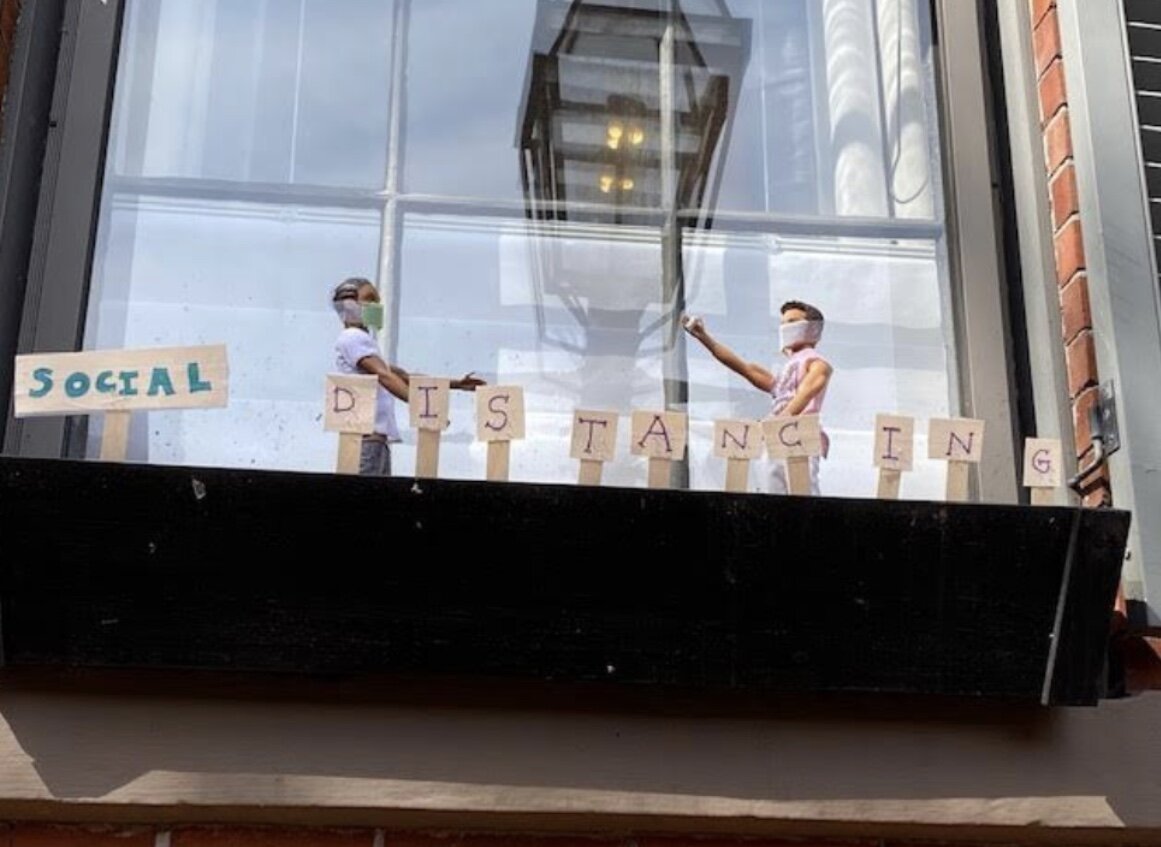
Now we walk together, and I keep my phone away. We walk and talk; point at colors, birds, trees, and fun window boxes; and say hello to the dogs (from six feet away, of course!).

These types of walks are a new skill I did not have before. Now I get to look around and practice appreciation, and I really get to enjoy seeing my daughter have fun up close. I come back from these walks feeling lighter, more grounded, and ready to start my day. When the day comes where I can head back to the office, I know I will very much miss these walks—and realizing that helps me appreciate time in general. This is time I get with her that I did not have before, and we all know how quickly time often seems to go! Who knew one skill could give so much?

You never know what skills and strategies are going to work for you and stick around long-term, so I recommend trying lots of things out at least a few times. Even if your initial thought is “that’s not for me,” give it a go!

I did not think about adding an extra 30 minutes to my morning until I saw my husband do it. I love my sleep, so I was honestly skeptical this would work for me. But I decided to try it, and now I look forward to that time and cherish it.

I hope you can find some help with these skills. I’d be curious to know how they go for you.

How to Manage Stress in Uncertain Times

Who knew when I decided to create a spring series focusing on stress management that there would be a pandemic and all of our stress levels would shoot through the roof? Not me.
 
2020 is giving us a run for our money, and now it’s more important than ever to learn how to manage our stress so it doesn’t permanently move into our lives.
 
What I’ve been hearing about most from people over the past two weeks is the stress of managing uncertainty.
 
There is an understanding that most things in our lives are uncertain, but moving through our general fast-paced days pre-pandemic, we could forget that fact. But now uncertainty is screaming at us. And with this much uncertainty, stress is never very far behind.
 
When will this be over?
When can I go back to work?
What if I get sick or someone I know gets sick?
Will this happen again?
When can I see my friends?
 
These are all good questions, and not having the answers right now gives stress a good chance of taking over our lives. So how do you manage stress when feeling bogged down by uncertainty?
 
Here’s one tried and true strategy I live by (I’ve been using it for the past two weeks) and want to share with you:
 
Break tasks into slivers, not chunks.

Breaking any task that causes stress into smaller pieces causes a big picture idea—which can feel overwhelming—to get slivered out into several small and more manageable bits, creating steps toward the bigger goal. This strategy allows us to see a way through to the end. That’s why it’s one of my favorites. Seeing slivers gives a starting point. Chunks can create panic.
 
For example, looking at our current situation as a chunk can get overwhelming very quickly. Then the questions I listed above have room to grow in our minds. We don’t know the answers, and that alone can cause stress. So I suggest slivering this situation out to make the unknown less daunting.
 
An example of a sliver would be “I got through yesterday and today is going OK so far.” That is honestly as far as any of us can go with being certain about anything, and saying a statement like that to ourselves can help us get into the present, to focus on what we are doing in the moment instead of looking into the uncertain future.
 
Another way to manage the challenges we're all facing is to introduce elements into your daily routine that you look forward to. This could be a work-related task, a catch-up call with friends, or tackling household chores that you've been postponing. Additionally, if you're dealing with mental health issues and seeking to make them more manageable, consider exploring your support options. This might involve finding a therapist, joining a support group, or seeking more intensive treatment. For instance, if you are struggling with alcohol use, recovery services like alcohol rehab near me play a crucial role. Such support can help you establish a structured schedule and routine that you can depend on throughout the day, providing a framework that supports your recovery journey.

Creating some structure or focusing on something that will make you feel good or you know you have to do (you might dislike laundry, but clean sheets can feel nice!) helps break down the unknown into some certainty: “I know what’s coming today; I’m going to do laundry.”
 
Staying mindful and focused on slivers reduces stress and helps us take it one step at a time, one day at a time. That’s why I always say: Slivers, not chunks.
 
I encourage you to practice breaking your day into slivers. See if that helps improve your focus and decrease any stress you are feeling through this uncertainty.
 
If you are interested in learning more about managing your stress, I also encourage you to check out my online store, where I offer tons of skills to manage all types of stress.